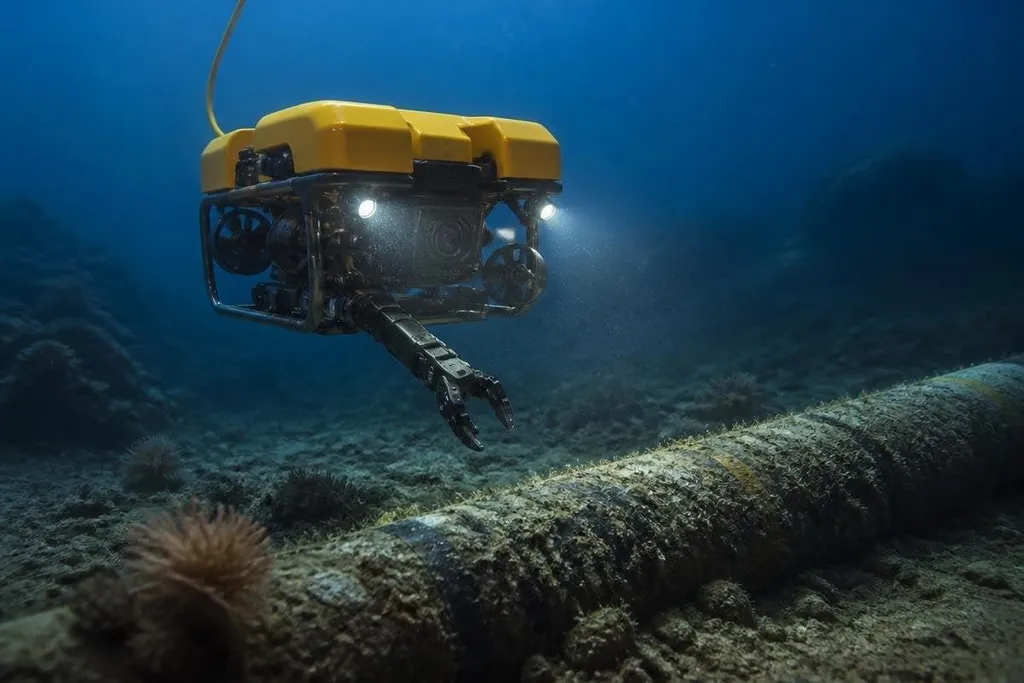
Underwater robots work with weak light, changing currents, and limited radio contact. AI helps them turn sensor data into choices while they inspect cables, map the seabed, or search for objects.
- Sonar can help a robot spot objects when cameras lose detail.
- Software can sort sensor data and flag areas that need a closer look.
- Human operators still set the task and handle uncertain cases.
Why underwater work is hard
A marine robot cannot depend on GPS below the surface. Water also bends light, scatters sound, and changes the way a robot moves. Those conditions make position estimates less certain than they are on land.
The robot gathers data from tools such as sonar, cameras, pressure sensors, and inertial sensors. An inertial sensor tracks changes in motion, while a pressure sensor helps estimate depth. AI software can compare these inputs and estimate where the robot is moving.
That estimate matters during inspection work. If the robot loses its position, a map of a pipeline or ship hull can become hard to use. A better position estimate lets the operator connect new images to the right place.
What AI does on the robot
Models can sort what the robot sees. A model trained on underwater images may label corrosion, cracks, marine growth, or a cable. Sonar models can also separate likely objects from the seabed, though the result depends on water conditions and training data.
This reduces the amount of video a person must review. The software can flag a section of a structure, then the operator can check the original image and sensor data before making a repair decision. The human still decides what the finding means.
The same software can help the robot choose its next movement. A vehicle inspecting a structure may slow down near a suspected fault, change its angle, or return to a section where the first scan lacked detail. Those actions depend on the robot’s control system, safety limits, and the quality of its map.
For companies buying marine automation, the useful question is not whether a robot has AI. Ask which task the software handles, what data it needs, and what happens when the data is poor.
When silt blocks a camera, a marine robot’s AI has less data to work with. Reports from Robot 24 can put the sensor, water conditions, task, and test result beside the claim before you judge what the software can do when visibility drops.
Where the limits remain
AI models need examples that match the job. A model trained on clear images of steel may perform poorly when sediment covers the same surface. A sonar model can also mistake an object for seabed texture when the signal is weak or the robot views it from a new angle.
Training data creates another limit. Marine sites differ in depth, salt content, visibility, light, and structure design. A system that works in one harbor may need new data before it can support an inspection in another location.
The link to the surface adds delay. Many underwater robots cannot send large video files through water, so they store data onboard or send smaller signals. The robot may need to act before a person sees the full image.
That makes failure handling part of the system, not an extra feature. A safe robot needs clear limits for speed, distance from a structure, battery use, and loss of communication. A model can suggest a route, but the control system must stop the robot when the route becomes unsafe.
A buyer’s check before deployment
Use this list when a vendor shows you an AI marine robot:
- Name the task: Ask if the model finds defects, builds maps, controls motion, or sorts inspection records.
- Check the data: Ask where the training images or sonar records came from and how closely they match your site.
- Request failure results: Ask what the robot does when visibility drops, sonar returns weaken, or its position estimate drifts.
- Measure the review time: Compare the time needed to check AI flags with the time needed to review every recording.
- Set human control: Confirm who can pause, redirect, or recover the robot during a live mission.
- Plan for updates: Ask how new site data gets tested before it changes the model used in paid work.
I’d judge a marine AI system by its failure records before its best video. A useful pilot should show detection results, false alarms, missed objects, recovery steps, and the time needed for a person to verify each finding.
The next practical step is a small, recorded mission in the water where you plan to work. Keep the raw sensor data, compare the AI output with a human review, and make the purchase decision from that gap.